Welcome to The Acres U.S.A. Eco-Ag Conference!

2025 50th Annual Eco-Ag Conference Tradeshow
Thanks for joining Acres U.S.A.® at our 50th Annual Eco-Ag Conference and Trade Show! Scroll down for a more detailed schedule.
Farming for Profit and Purpose

THE BEST SPEAKER AND TRADESHOW LINEUP IN REGENERATIVE AGRICULTURE
Event Schedule
Farming for Profit and Purpose!
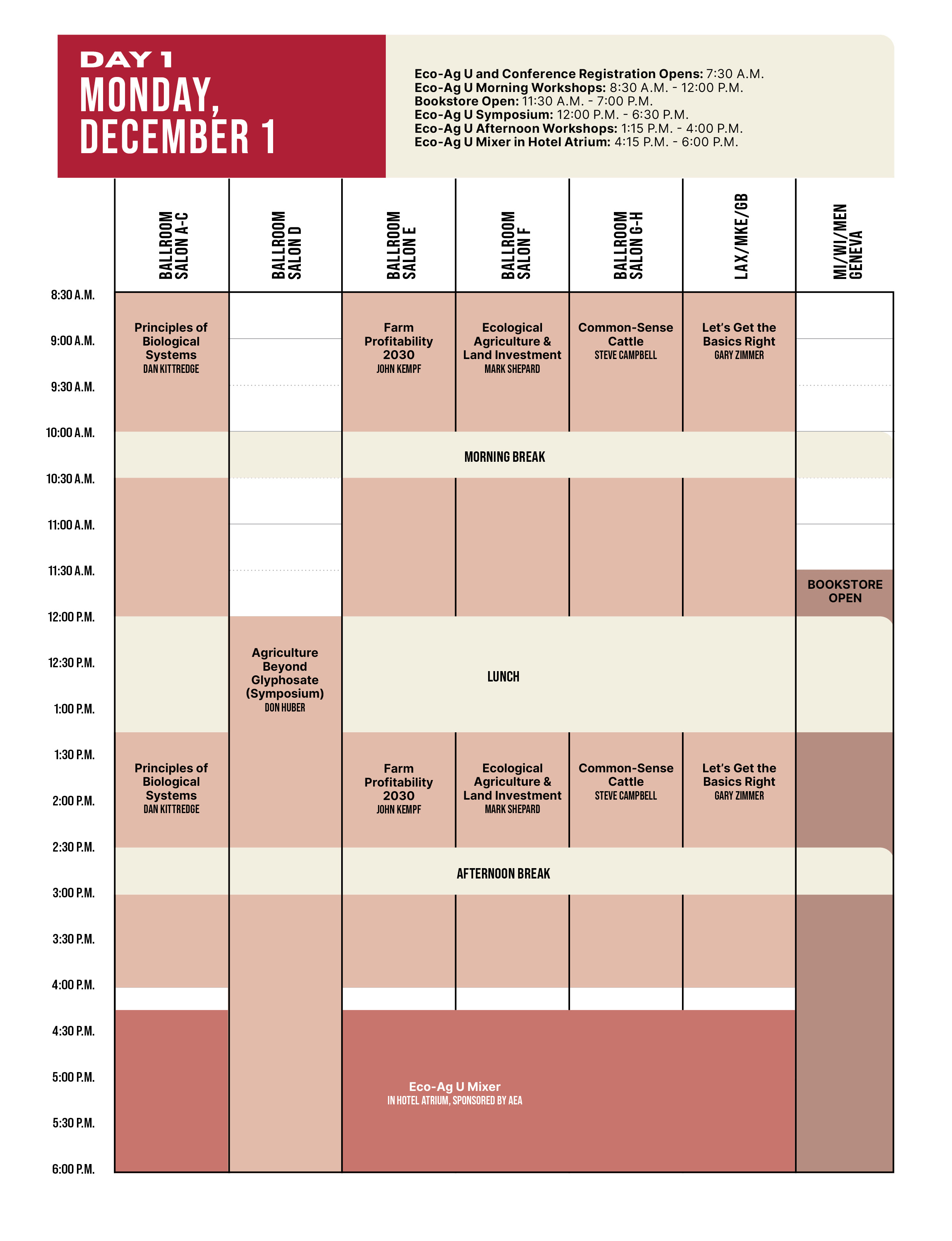
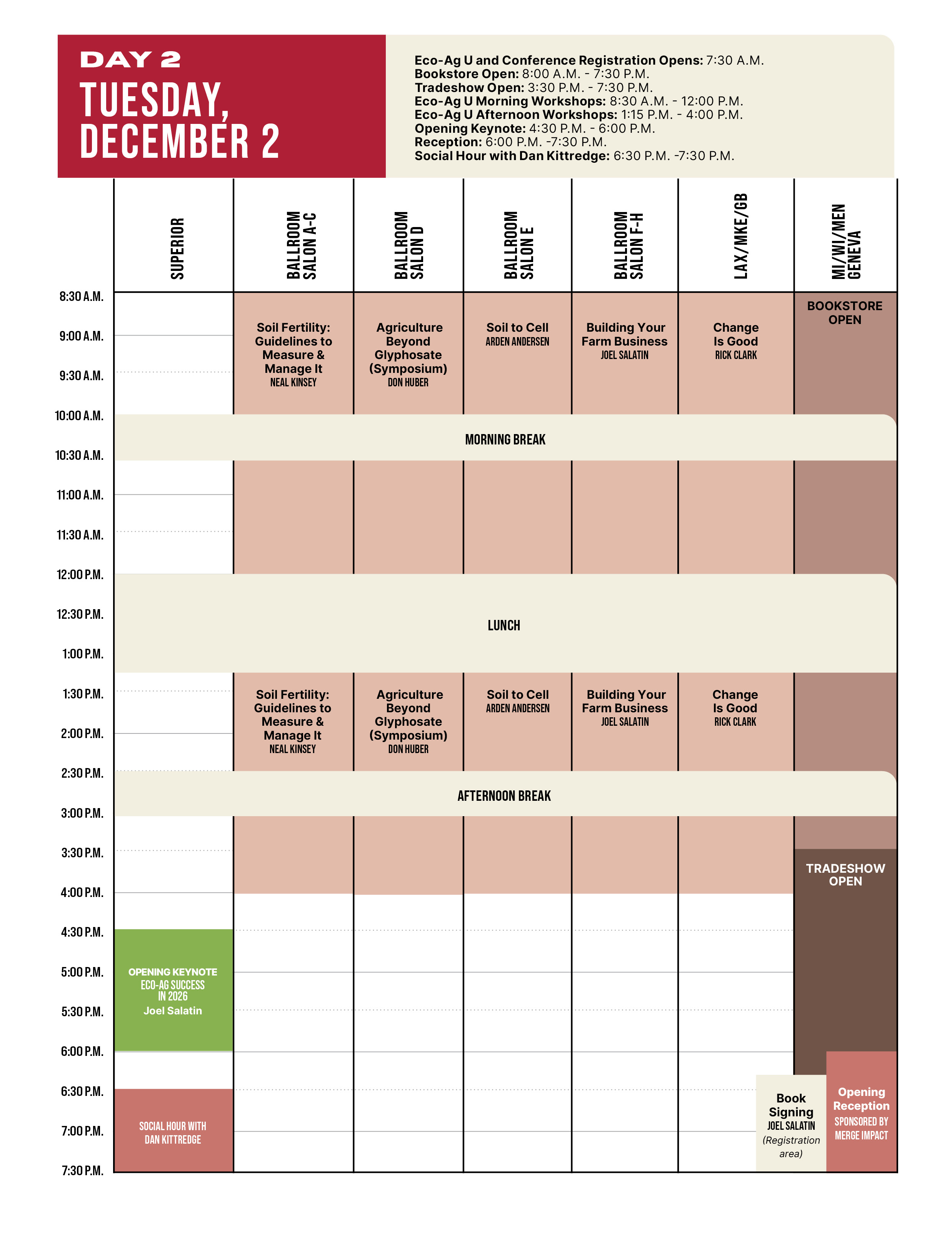
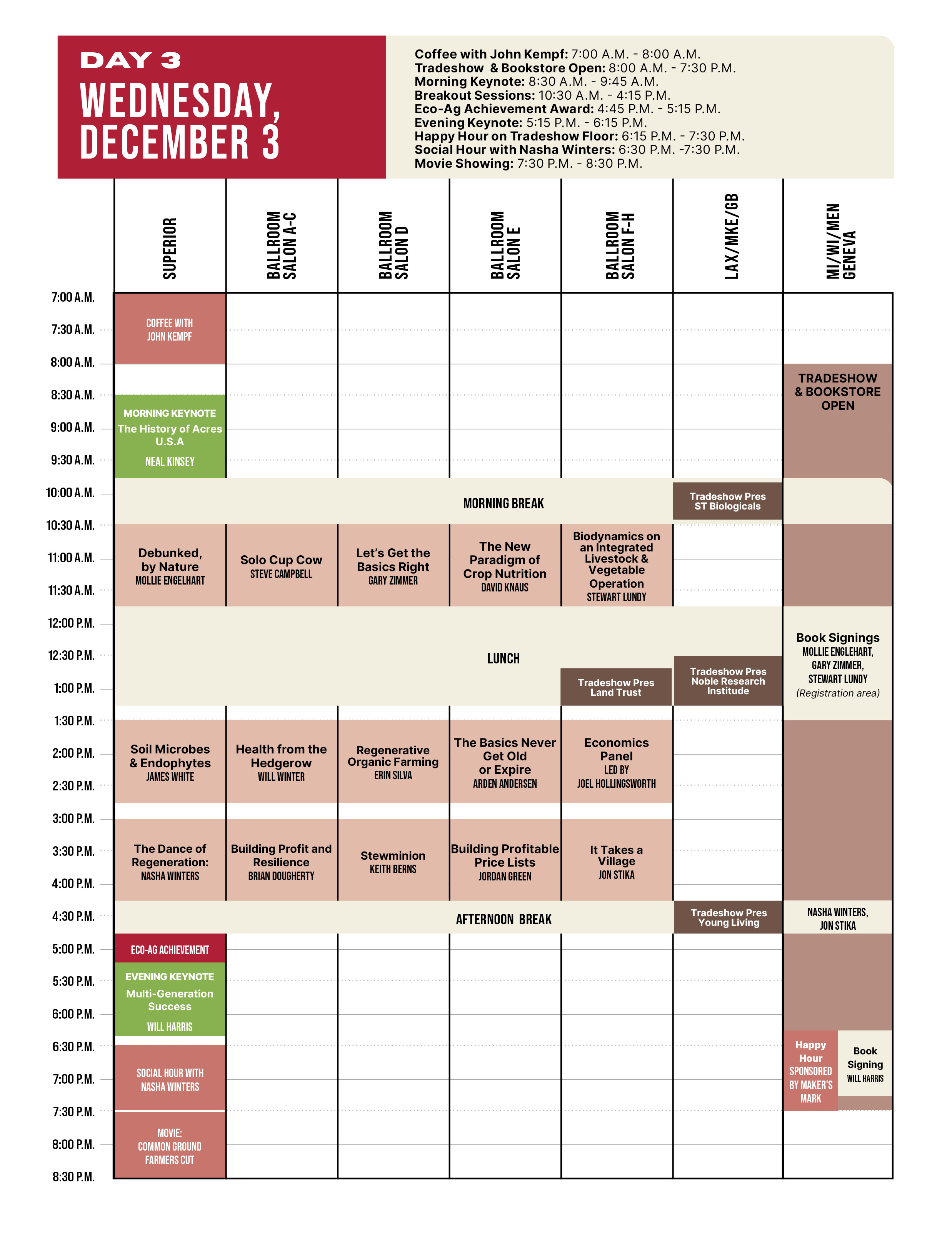
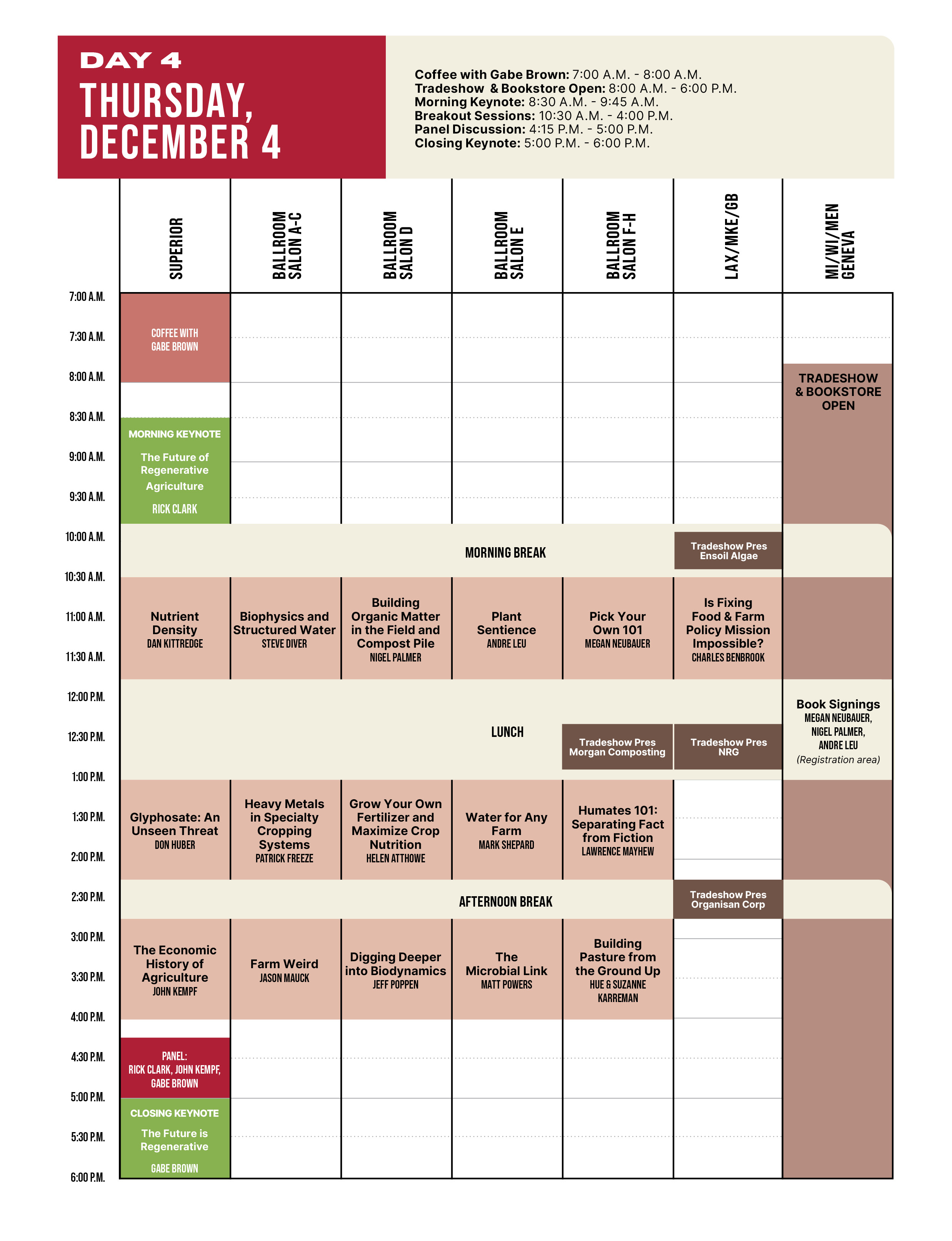

Day 1 | Monday, December 1st, 2025
Workshop Day: Attendance of all-day Eco-Ag U workshops require “1 or 2-Day Eco-Ag U + Conference” registration.
Eco-Ag U Registration Opens: 7:30am
Eco-Ag U Workshops: 8:30am - 4:00pm
Eco-Ag U Reception and Mixer: 4:30pm-6:00pm
Bookstore Open: 11:30am-7:00pm
Day 1 | Eco-Ag U - John Kempf - Farm Profitability 2030 - 8:30AM - 4:00PM - Salon E
Salon E — John Kempf: Farm Profitability 2030
Crop health consultant and founder of Advancing Eco Agriculture, John Kempf explores strategies farms will need to remain profitable by 2030—including biological efficiency, market adaptation, and reduced input reliance. Attendees will learn how regenerative systems can stabilize revenue and position their operation for success. This session provides a framework for making informed, resilient decisions that strengthen both farm productivity and long-term sustainability.

Day 1 | Eco-Ag U - Dan Kittredge - Principles of Biological Systems 8:30AM - 4:00PM - Salon A-C
Ballroom Salon A-C — Dan Kittredge: Principles Of Biological Systems
Description:
An in-depth framework—distilled from Acres elders—for producing nutrient-dense crops by aligning soil biology, plant vitality, and food quality. Practical principles you can apply immediately for productivity, resilience, and nutrition.
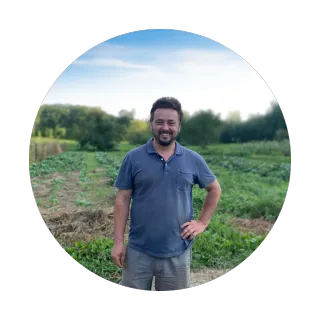
Day 1 | Eco-Ag U - Mark Shepard - Ecological Agriculture & Land Investment: Building The Farms Of The Future - 8:30AM - 4:00PM - Salon F
Ballroom Salon F — Mark Shepard: Ecological Agriculture & Land Investment: Building The Farms Of The Future
Description:
Mark Shepard explores how regenerative farm design, water management, and smart land investment can work together to build resilient, profitable farms. Learn how farmers, investors, and landowners can form partnerships that restore land, generate returns, and shape the future of ecological agriculture.
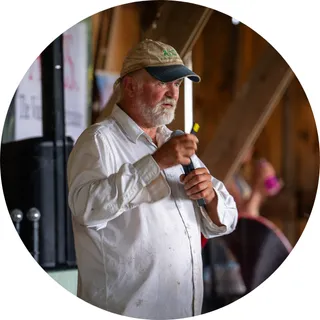
Day 1 | Eco-Ag U - Gary Zimmer - Lets Get The Basics Right 8:30AM - 4:00PM - Lax/MKE/GB
LAX/MKE/GB — Gary Zimmer: Lets Get The Basics Right
Hands-on fundamentals for farm success: minerals, biology, and soil structure. Read soil tests, plan rotations/crop choices, and pinpoint regeneration priorities to build a clear, productive, regenerative plan.
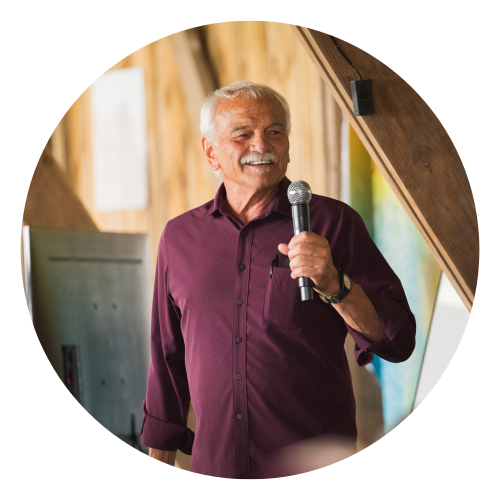
Day 1 | Eco-Ag U - Steve Campbell - Common-Sense Cattle 8:30am - 4:00pm - Salon G-H
Salon G-H — Steve Campbell: Common-Sense Cattle
Description:
Practical genetics and epigenetics for herd selection, breeding decisions, and overall herd health. Identify the traits that matter, implement cost-effective solutions, and improve cattle performance and resilience. Joined by Will Winter.
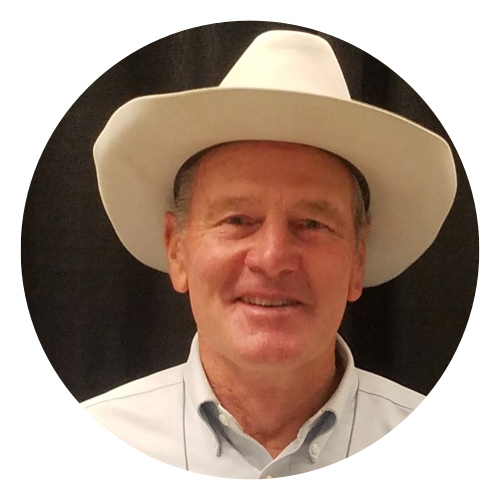
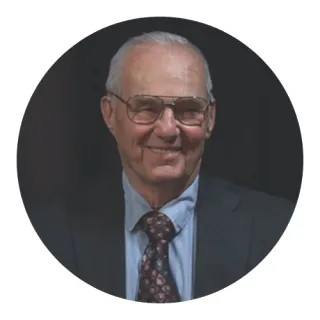
Day 1 | Eco-Ag U - Don Huber - Symposium “AGRICULTURE BEYOND GLYPHOSATE” 12:00pm - 6:30pm - GLK SAUERKRAUT Co-Sponsor - Salon D
Ballroom Salon D — Don Huber: Agriculture Beyond Glyphosate (Symposium)
Description:
Two-day deep dive on glyphosate’s agronomic and health impacts; measurement across ecosystems; microbial/livestock effects; and practical, biological pathways to recovery and resilient, post-glyphosate farming systems.

Day 2 | Tuesday, December 2nd, 2025
Workshop Day & Conference Start: Attendance of all-day Eco-Ag U workshops require “1 or 2-Day Eco-Ag U + Conference” registration.
Eco-Ag U and Conference Registration Opens: 7:30am
Eco-Ag U Workshops: 8:30am - 4:00pm
Bookstore Open: 8:00am-7:00pm
General Conference Registration Opens: 10:00am
Trade Show Open: 3:30pm-7:00pm
Opening Keynote Joel Salatin: 4:30pm-6:00pm
Reception on Trade Show Floor: 6:00pm-7:30pm
The general conference will kick off on Tuesday afternoon.
Day 2 | Eco-Ag U - Joel Salatin - BUILDING YOUR FARM BUSINESS - 8:30AM - 4:00PM - Salon F-H
Salon F-H — Joel Salatin: BUILDING YOUR FARM BUSINESS
Beyond cows, compost, and cover crops—the toughest hurdles are business systems: working with family, finances, teams, branding, scale, and operations. Practical methods, time & motion, and communication that sustain real-world farms.

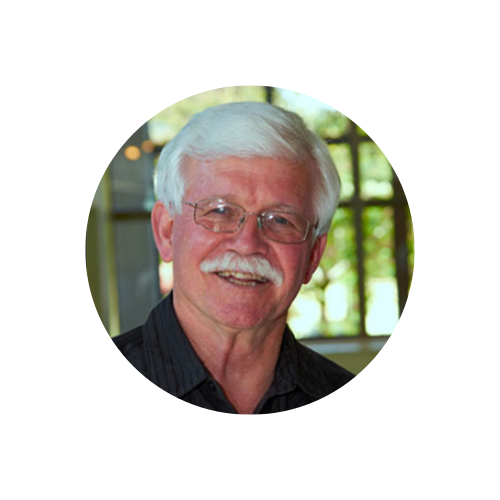
Day 2 | Eco-Ag U - Neal Kinsey - Soil Fertility - Guidelines to Measure in Order to Manage It. 8:30AM - 4:00PM - Ballroom A-C
Ballroom Salon A-C — Neal Kinsey: Soil Fertility - Guidelines to Measure in Order to Manage It.
Hands-on methods to assess what soils and crops truly need (without expensive lab dependence), avoid “good plan” pitfalls, and boost nutrient content while preventing problems before they get costly.
Day 2 | Eco-Ag U - Don Huber - Symposium “AGRICULTURE BEYOND GLYPHOSATE” 8:00 AM- 4:00 PM - GLK SAUERKRAUT Co-Sponsor - Salon D
Ballroom Salon D — Don Huber: Agriculture Beyond Glyphosate (Symposium)
(Part 2) Policy/health context, industry dynamics, biological/microbial recovery pathways, and practical alternatives for weed control—ending with a panel and Q&A.
Tuesday December 2nd: 8:00 am - 4:15pm
Day 2 | Eco-Ag U - Rick Clark - Farm Green and the Economic Benefits of Regenerative Practices 8:30AM - 4:00PM - LAX/MKE/GB
Salon E — Rick Clark: Change Is Good
Meet farmers where they are on the regenerative journey. Data-driven steps to build systems that fit your operation while improving soil health, reducing inputs, and increasing profitability—starting now. Joined by John Kempf & Gabe Brown.
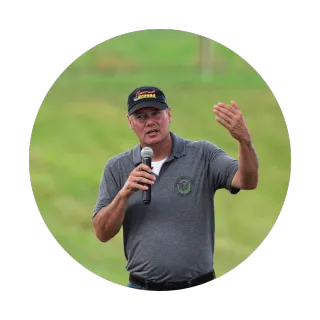
Day 2 | Eco-Ag U - Arden Andersen - Soil to Cell: The True Roots of Health, Disease & Nutrition - 8:30AM - 4:00PM - Salon E
Salon E — Dr. Arden Andersen: Soil to Cell: The True Roots of Health, Disease & Nutrition
Connect soil biology, nutrient density, endocrine balance, and chronic disease. Define “true health,” revisit ancestral diets, and apply tools to restore the soil-to-human health connection in practice.

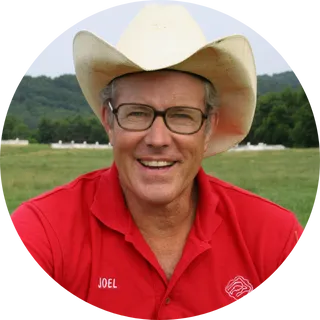
Evening Keynote - Joel Salatin - Superior
4:45 pm - 6:00 pm
Eco-Ag Success in 2026 (Keynote): Joel Salatin explores how the next generation of farmers can thrive by merging ecological principles with smart marketing. Drawing from decades at Polyface Farm, he shares how creativity, integrity, and entrepreneurship will define the future of successful, regenerative agriculture.
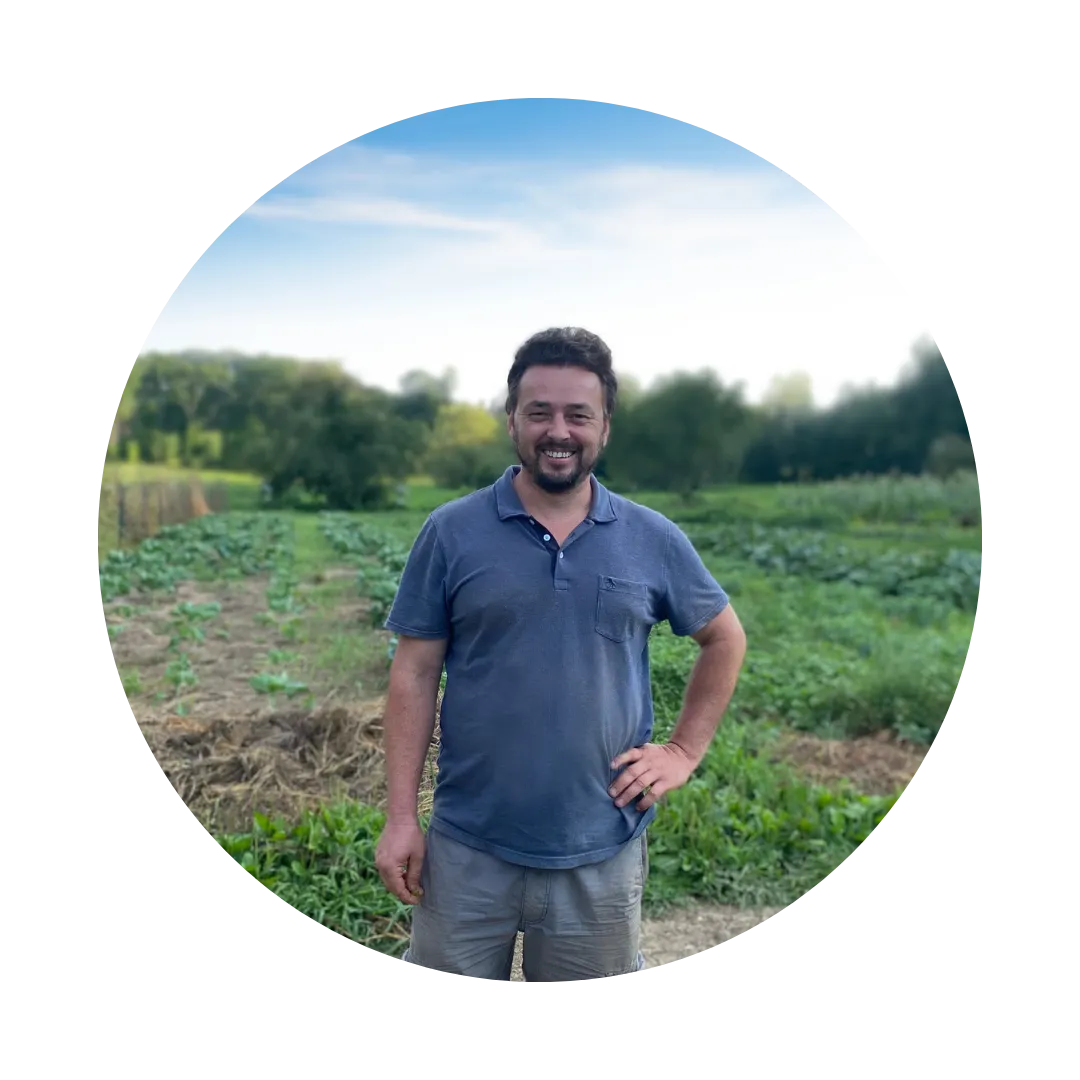
Social Hour With Dan Kittredge - Superior
6:30 pm - 7:30 pm
Q& A on Defining Nutrient Density: Building a Transparent Food System

Day 3 | Wednesday, December 3rd, 2025
Registration Opens: 7:30am
Tradeshow & Bookstore Open: 8:00am-7:30pm
Morning Keynote - Neal Kinsey: 8:30am
15 Different Breakout Sessions: 10:30am-4:30pm
Evening Keynote - Will Harris: 4:30pm-6:15pm
Reception on Trade Show Floor: 6:15-7:30pm
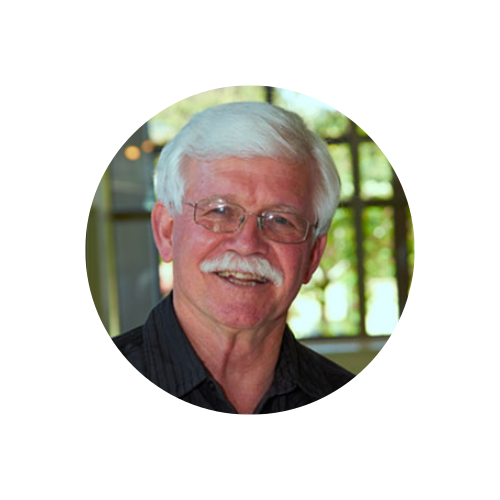
Morning General Session - Neal Kinsey - Superior
8:30 am - 9:45 am
The History of Acres: 50 Years of Growing a Ecological Movement(Keynote): For half a century, Acres U.S.A. has stood at the forefront of ecological agriculture—challenging convention, sharing knowledge, and empowering farmers to work with nature. In this keynote, Neal Kinsey reflects on the people, principles, and pioneering ideas that transformed Acres from a small publication into a global force for soil health and regenerative farming. Drawing from decades of firsthand experience, he explores how Acres’ commitment to education and independence has shaped the future of agriculture—and why its mission is more vital than ever for the next generation of growers.

Break & Tradeshow Presentation - LAX/MKE/GB
9:45 am - 10:15 am
ST Biologicals - Technologies for Soil Health in Production Agriculture Systems
Breakout 1
10:30 - 11:45 am
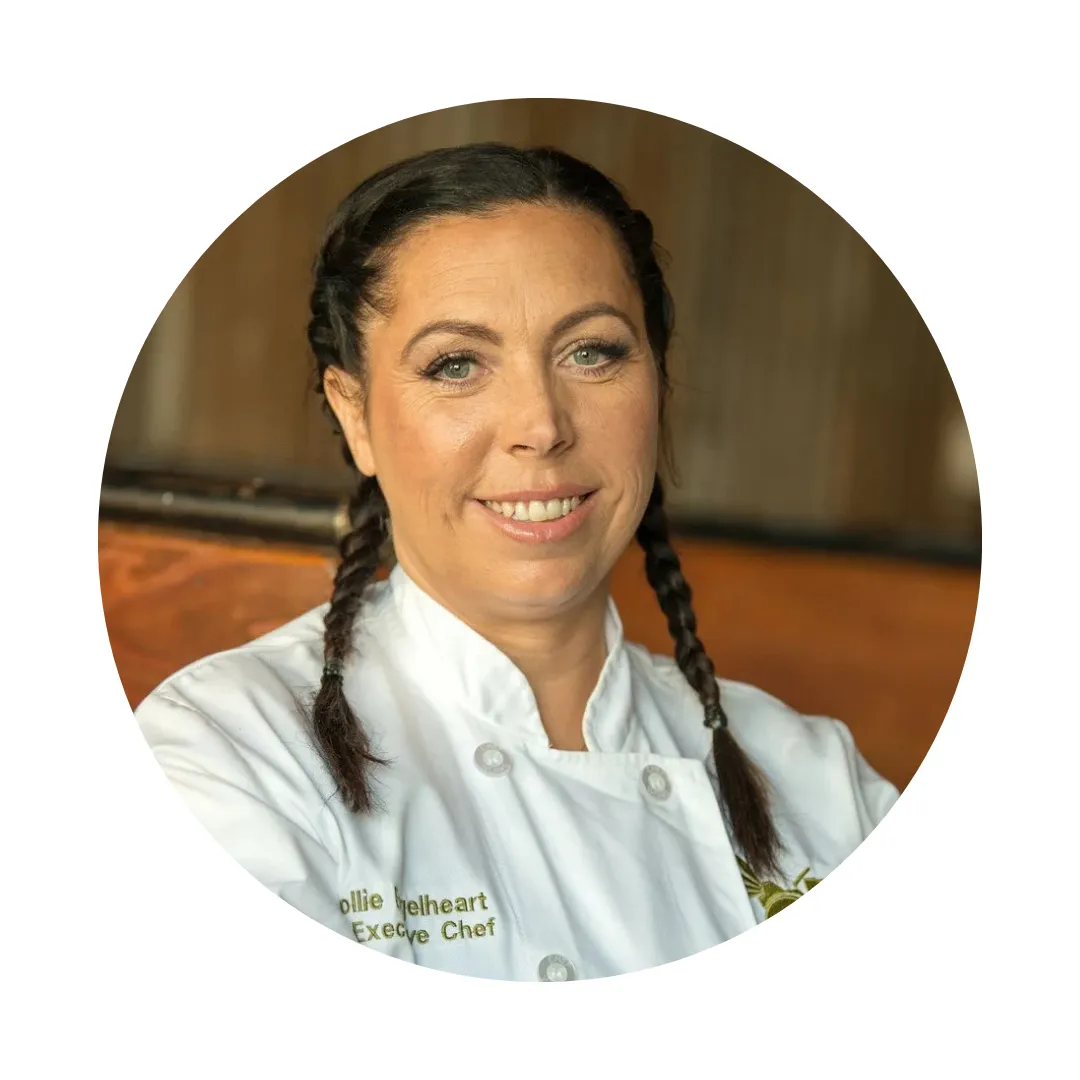
Mollie Engelhart
Superior
Debunked, by Nature - Mollie Engelhart explores the principle that nature is conservative, operating with balance and efficiency in all systems. She shares her personal journey from veganism to regenerative cattle ranching, highlighting ecological, ethical, and practical lessons learned. Drawing from her book, she shows how to work with natural systems, reconnecting food production with the rhythms and constraints of the environment.
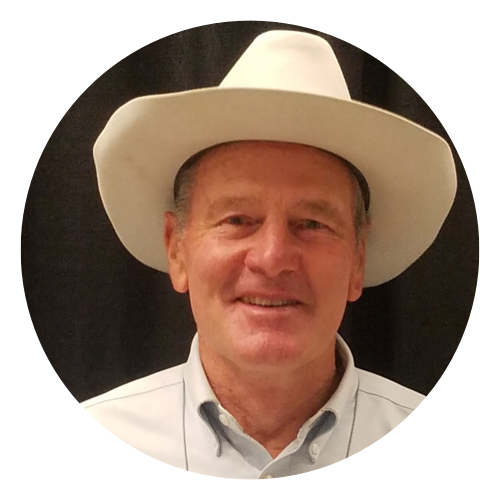
Steve Campbell
Salon A-C
Solo Cup Cow - This session introduces a visual approach to identifying optimal cow conformation for fertility and feed efficiency. Using a Solo cup on its side as a model, Campbell illustrates the ideal cow shape to indicate high digestive capacity, better fat deposition, and improved reproductive performance. Attendees will learn to assess these traits to select cattle that are more fertile, easier to manage, and cost-effective to feed.
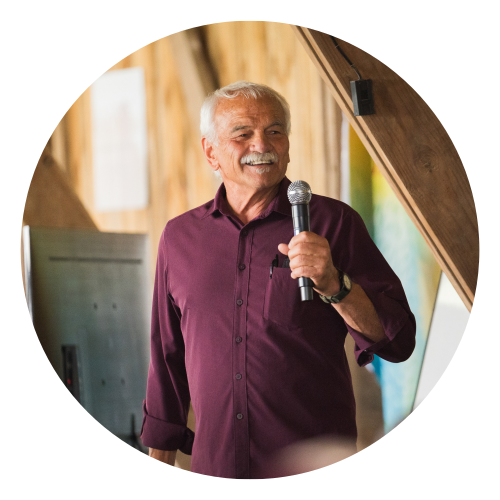
Gary Zimmer
Salon D
PROFITABLE BIOLOGICAL
FARMING - Soil expert Gary Zimmer breaks down how biological farming can dramatically improve your
bottom line. Learn practical,
field-tested strategies tog.enhance soil biology, reduce inputs, strengthen crop performance, and build a more resilient, profitable farm system.
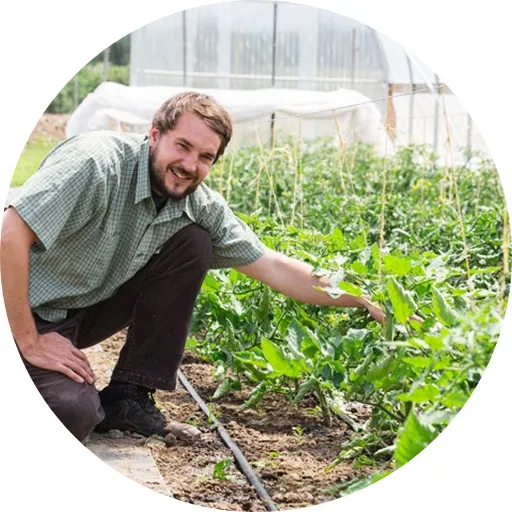
David Knaus
Salon E
The New Paradigm of Crop Nutrition - Follow minerals from soil fractions through leaf sap analysis to crop mineral density. Connect soil testing, plant uptake, and crop analysis to unlock the “hidden” N, P, K, and micronutrients already on your acres—and learn how systems release them.
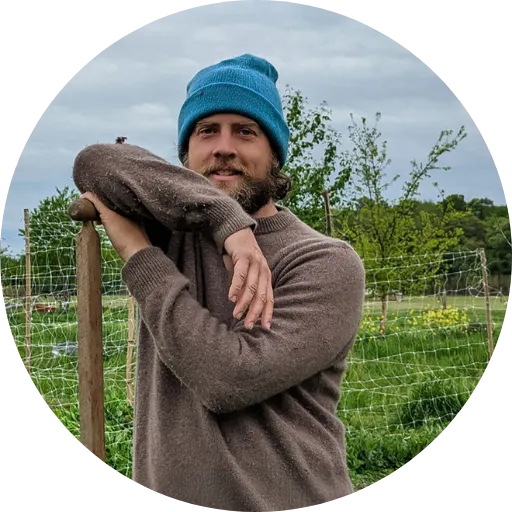
Stewart Lundy
Salon F-H
Biodynamics on an Integrated Livestock & Vegetable Operation - Whether new or curious about biodynamics, learn practical applications of preparations to improve quality and yields—framed within the holistic concepts that guide biodynamic agriculture.
Lunch and Tradeshow Presentation
11:45 am - 1:30 pm
Tradeshow Presentation 12:45 - 1:15PM - Noble Research Institute - Living Soil, Thriving Trees: A Grower's Regenerative Path and the Science Beneath.”
Breakout 2
1:30 - 2:45 pm

James White
Superior
Soil Microbes & Endophytes - How plants harness soil microbes and endophytes to fortify nutrition, stimulate development, boost pest/disease resistance, and increase stress tolerance—practical guidance for leveraging these partnerships.
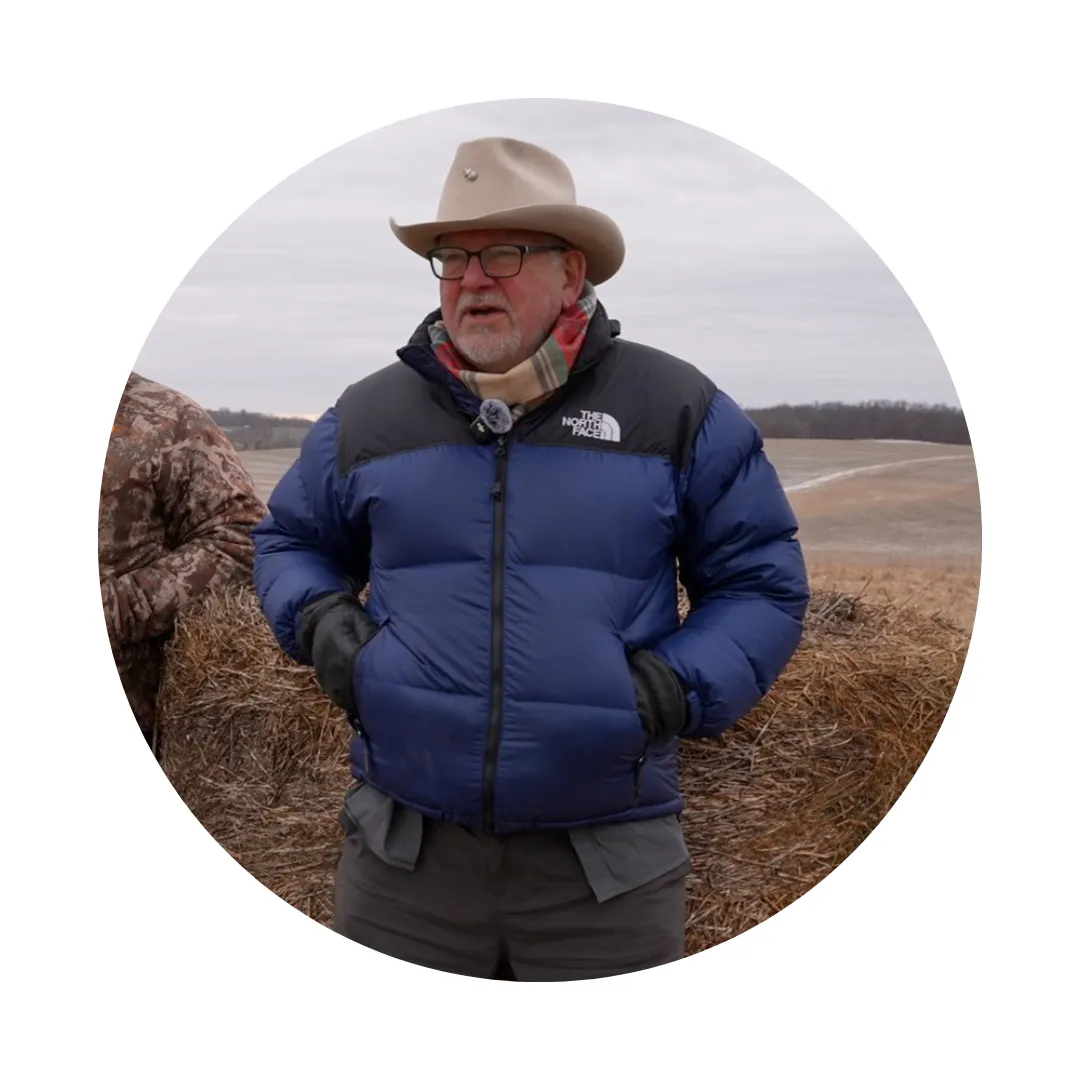
Will Winter
Salon A-C
Health from the Hedgerow - Woody, perennial shrubs/bushes offer deep bio-nutrients that help reduce or eliminate antibiotics, chemical wormers, and vaccines. Practical ways to use biodiversity to improve livestock health and system resilience.
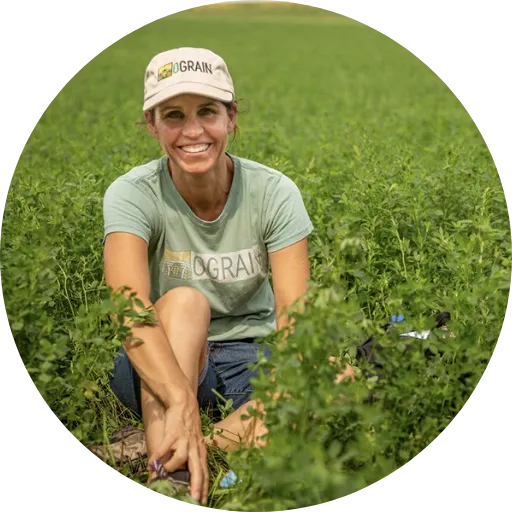
Erin Silva
Salon D
Regenerative Organic Farming: Making It Work for Your Farm - Actionable strategies from organic no-till and regenerative systems: integrate soil biology, rotations, and cover crops to build soil health, productivity, and reduce inputs.

Dr. Arden Andersen
Salon E
The Basics Never Get Old or Expire - Trends come and go, but the core sciences behind soil and plant health remain timeless. Dr. Andersen revisits the foundational teachings of agricultural pioneers to show how mastering biology, chemistry, and physics solves modern production and environmental challenges. Real innovation, he reminds us, starts with getting the basics right.
Economics Panel: LAX/MKE/GB
The Stacked Deck- the current economics in agriculture and why young farmers are at a structural disadvantage - Agriculture is at a breaking point, with aging farmers and decades of policy that have drained rural communities and stifled new entrants.
In this candid panel, Joel
Hollingsworth, Matt Hintz,
JR Burdick, and Adam Lasch
confront the economic and
policy barriers facing today’s
first-generation and regener-
ative-minded farmers — and
explore bold ideas to re-
build thriving farms and rural
economies.
Breakout 3
3 - 4:15 pm

Nasha Winters
Superior
The Dance of Regeneration: Reconnecting Human and Humus for a Healthier Future - Cancer care is on the brink of transformation—not through a single breakthrough drug, but through a new understanding of health itself. Dr. Nasha Winters reveals how metabolic medicine and regenerative agriculture are reshaping prevention and healing. By restoring both the body’s internal terrain and the soil that nourishes it, we can strengthen immunity, enhance recovery, and create a future where the path to wellness heals people and the planet together.
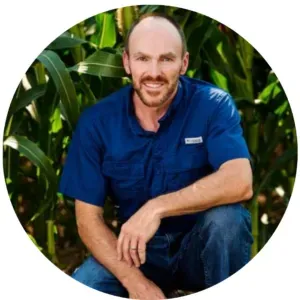
Brian Dougherty
Salon A-C
Building Profit and Resilience With a Systems Approach to Biological Farming - Economics of transitioning away from conventional management and toward biology-first systems. Practical nutrient-management strategies that prioritize soil biology, enhance crop quality, reduce inputs, and improve resilience.
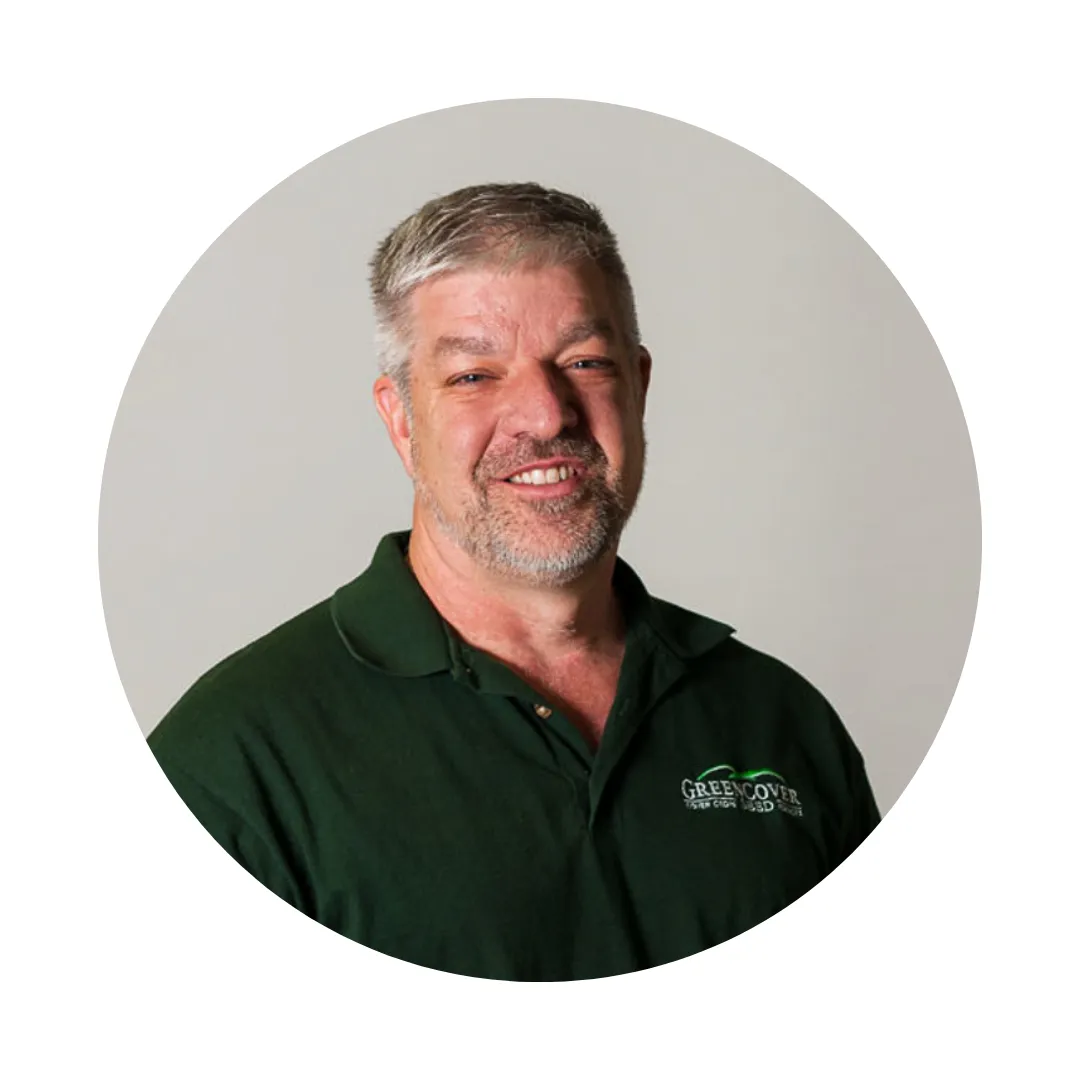
Keith Berns
Salon D
Stewminion: A Biblical Approach to Environmentalism - A faith-based framework combining dominion and stewardship—what it means to live regeneratively while honoring creation’s design. Practical and spiritual insights for sustainable farming.
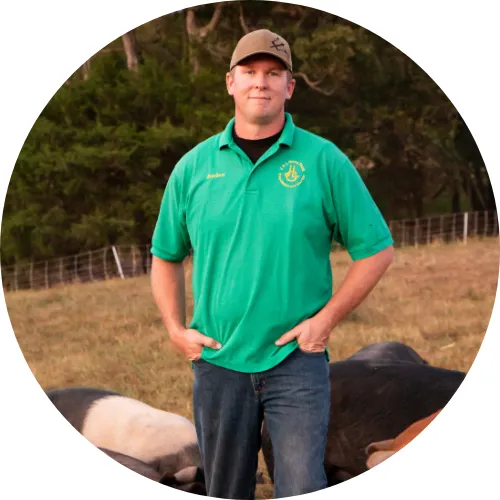
Jordan Green
Salon E
Building Profitable Price Lists - Direct retailing meats brings new challenges for farmers - building a wholesale/retail pricelist that is both profitable and competitive. With multiple farm enterprises this can be an especially difficult proposition. In this session you will learn the basics of carcass audits, capturing ALL costs, assigning profit and translating it into a whole animal or by the cut pricelist. No more copying someone else's pricelist! Know your costs and what it takes for your enterprise to be viable.
Jon Stika
Salon F-H
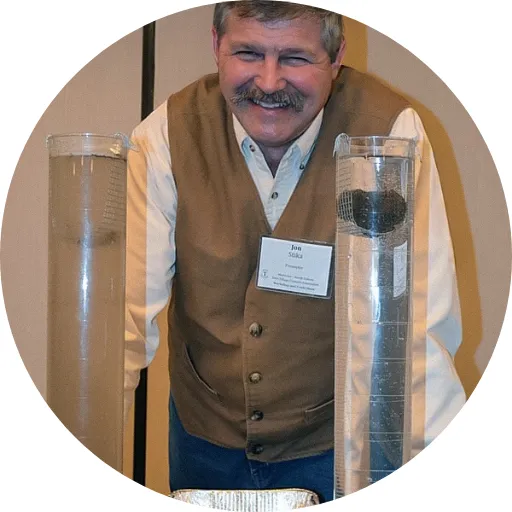
It Takes a Village to Implement Regenerative Agriculture - Regenerating soil isn’t a solo effort—it’s a community endeavor. Drawing from his book A Soil Owner’s Manual and decades of work in soil health, Jon Stika explores how farmers, landowners, agronomists, and local networks can work together to restore living, resilient soils. This session highlights the biological principles that drive soil function, the human connections that sustain change, and the collective mindset needed to rebuild agriculture from the ground up.
Break & Tradeshow Presentation
4:15 pm - 4:45 pm
Young Living Essential Oils - Biodiverse Solutions to Restore Soil and Amplify Profitability

Evening Keynote - Will Harris - Superior
4:45 pm - 6:15 pm
Multi-Generation Success: The Key to Rural Revitalization (Keynote): For more than 25 years, Will Harris has transformed White Oak Pastures into a thriving model of regenerative agriculture and rural renewal. In this inspiring keynote, he shares how a commitment to land, livestock, and community across generations has revitalized not only his family farm but his entire hometown of Bluffton, Georgia. Will explores the principles behind building lasting rural prosperity—rooted in soil health, ethical production, and creating meaningful local economies that endure for generations to come.

Day 4 | Thursday, December 4th, 2025
Registration Opens: 7:30am
Bookstore: 8:00am-3:30pm
Trade Show: 8:00am-3:30pm
Morning Keynote - Rick Clark: 8:30am
15 Different Breakout Sessions: 10:30am-4:00pm
Panel Discussion: 4:15 - 5:00pm
Final Keynote - Gabe Brown: 5:00-6:00pm
Conference Ends: 6:30pm
Morning General Session - Rick Clark - Superior
8:30 am - 9:45 am
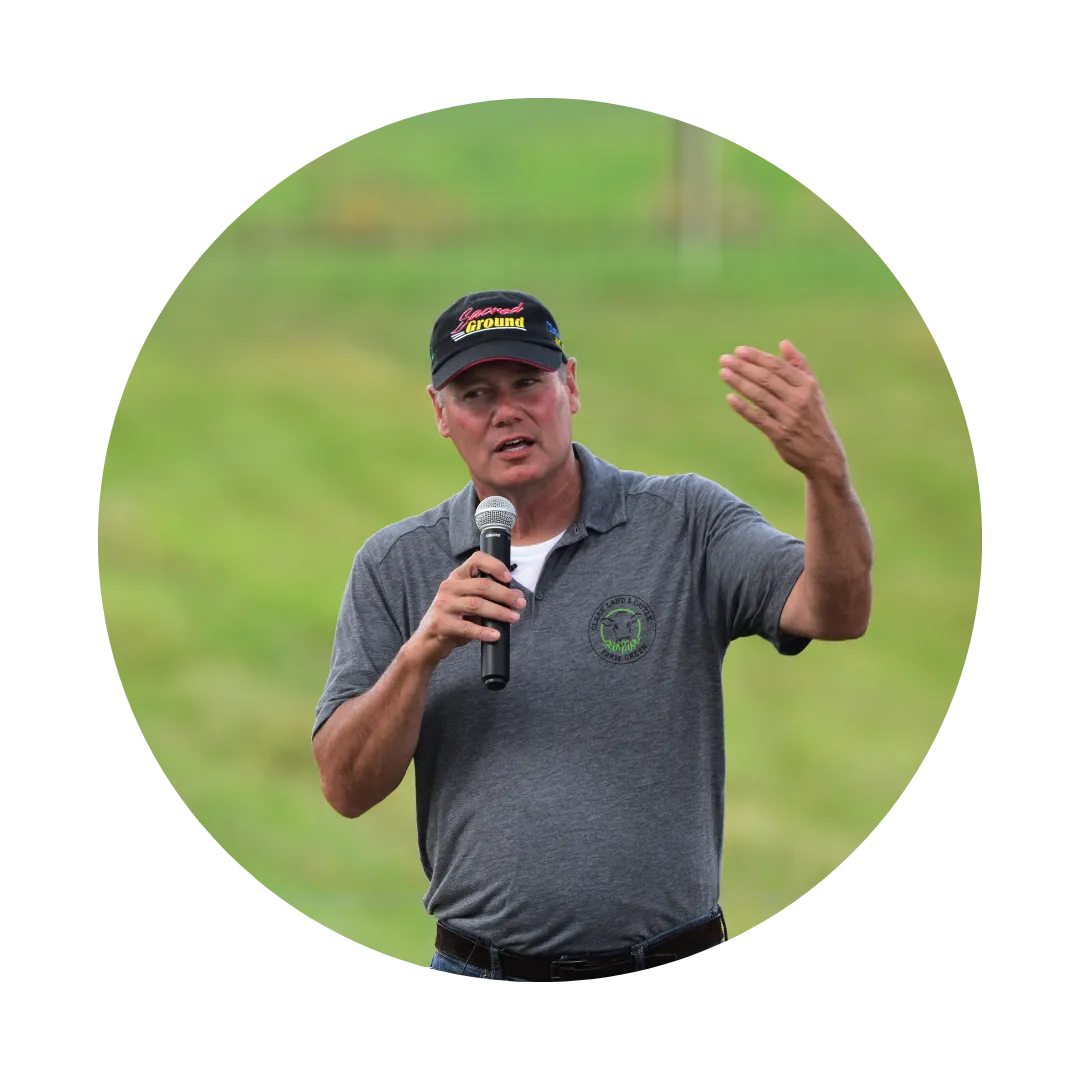
The Future of Regenerative Agriculture (Keynote): Fifth-generation farmer Rick Clark shares how innovation and adaptability are redefining modern agriculture. Drawing from his own regenerative journey, he shows how farmers can cut inputs, build soil health, and stay profitable in a changing world—proving that the future of farming is both sustainable and resilient.
Breakout 1
10:30 - 11:45 am
Dan Kittredge
Superior
Nutrient Density - History, current research, and future vision for nutrient-dense food. How nutrient density links soil health, plant vitality, and human well-being—with practical steps to steer farming and food quality.

Steve Diver
Salon A-C
Biophysics and Structured Water in Agriculture - The often-overlooked “third leg” of eco-ag: frequencies, sound, and bioresonance—plus practical updates on magnetized/structured water to enhance plant, soil, and animal vitality.

Nigel Palmer
Salon D
Building Organic Matter in the Field and Compost Pile - Hands-on mineral amendments (including fermented plant juices) and element ratios that drive biology. Practical science and demonstrations to build OM in fields and compost while minimizing losses.

Andre Leu
Salon E
Plant Sentience - Plants communicate, remember, and work with the soil microbiome. Apply these insights to improve productivity and efficiency with more plant-centered, regenerative practices.

Megan Neubauer
Salon F-H
Pick Your Own 101 - Running a successful pick-your-own farm is about more than growing fruit—it’s about creating an experience that connects people to the land. Drawing from her book and hands-on experience, Megan Neubauer shares practical guidance on everything from planning and crop selection to farm layout, staffing, and customer engagement. Learn proven strategies to boost profitability, streamline operations, and build a loyal community around your farm—so both your crops and your customers keep coming back year after year.
Lunch and Tradeshow Presentation
11:45 am - 1:30 pm
Tradeshow Presentation 12:45 - 1:15PM - Noble Research Institute - Living Soil, Thriving Trees: A Grower's Regenerative Path and the Science Beneath.”
Breakout 2
1 - 2:15 pm
Don Huber
Superior
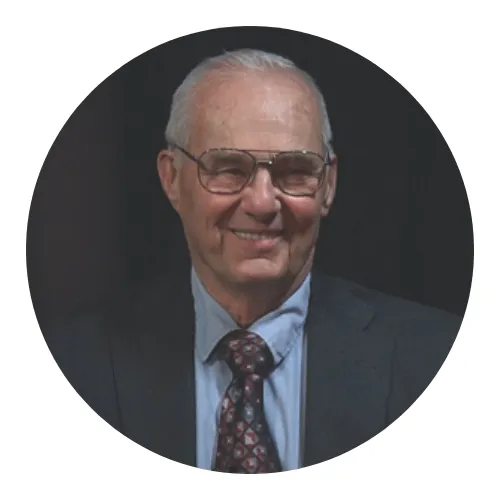
Glyphosate: An Unseen Threat to Agricultural Sustainability and Health - Residual glyphosate undermines production and health. Why simple chelation “kicks the can,” where biodegradation solutions are headed, and how to restore agricultural efficiency.
Patrick Freeze
Salon A-C
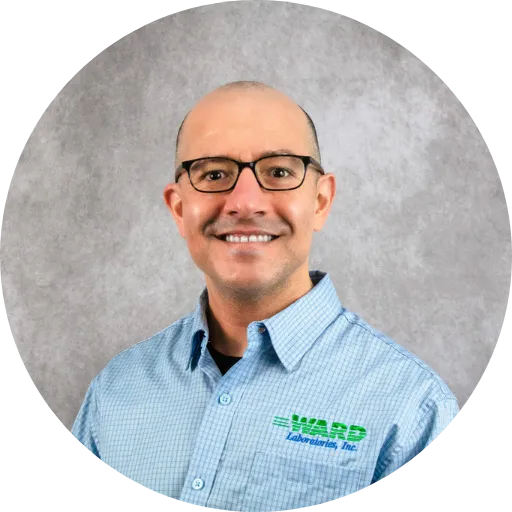
Heavy Metals in Specialty Cropping Systems - Affordable strategies to minimize plant uptake in high-value crops (pH control, organic matter, binders like phosphate/iron/biochar) and how to verify success with tissue analysis and bioavailable metal tests.

Helen Atthowe
Salon D
Grow Your Own Fertilizer and Maximize Crop Nutrition - Four decades of cover crops/living mulches, no-till residue timing, and C:N optimization to minimize off-farm inputs. Link practices to soil microbes, beneficials, and natural suppression of pests/disease.
Mark Shepard
Salon E
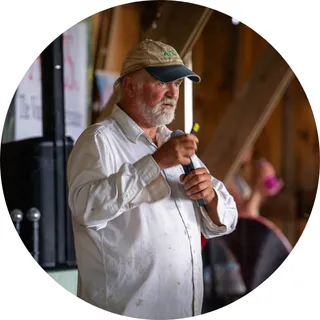
INVESTING IN ECOLOGY - What if restoring the land could also revive rural economies? In this forward-thinking session, Mark Shepard explores how
ecological agriculture and smart investment can create abundance for people and planet. He’ll share real-world examples of farmers and investors partnering to build profitable, water-secure, regenerative systems that last.
Lawrence Mayhew
Salon F-H
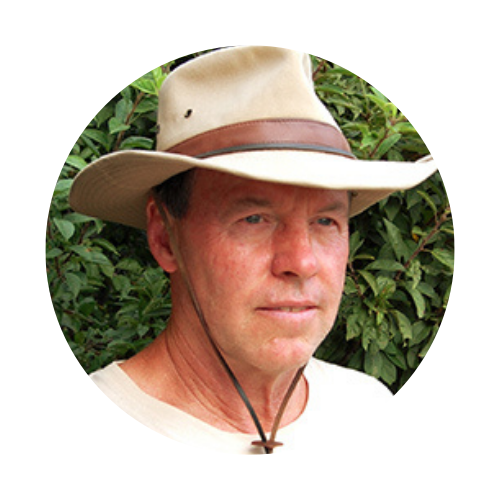
Humates 101: Separating Fact from Fiction - Not all “humic” products are genuine. How to identify authentic, high-quality sources with validated scientific methods and avoid counterfeits—even among “certified organic” products.
Break & Tradeshow Presentation
2:15 pm - 2:45 pm
Organisan Corp
Breakout 3
2:45 - 4 pm

John Kempf
Superior
The Economic History of Agriculture & how to succeed for the next 10 years - How past economic choices shaped today’s systems—and strategies to navigate current markets and production for resilient, profitable farms.

Jason Mauck
Salon A-C
Farm Weird - Challenge conventional thinking with a “farm weird” philosophy—using creativity, data, and biology to make relay cropping systems more productive and resilient. In this session, he shares how overlapping crops, timing, and diversity can unlock efficiency, boost soil health, and build a new model for profitable regenerative farming.
Jeff Poppen
Salon D
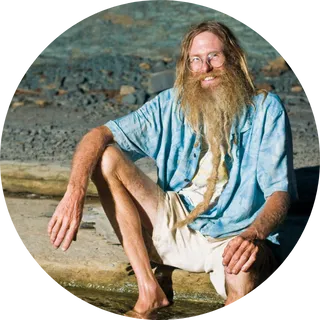
Digging Deeper into Biodynamics - From Steiner’s Agriculture lectures to farm individuality, BD preparations, stock feeding, and permaculture—how to produce the best sustenance with minimal outside inputs.
Matt Powers
Salon E
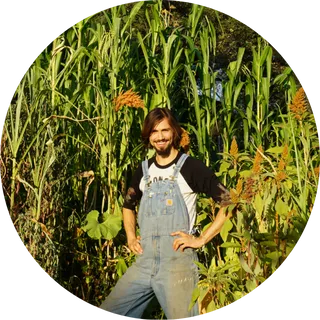
The Microbial Link - Why peak health, immunity, quality, and yields all trace back to the right microbes—inside plants and in soils—and how to partner with them strategically to save money and improve outcomes.
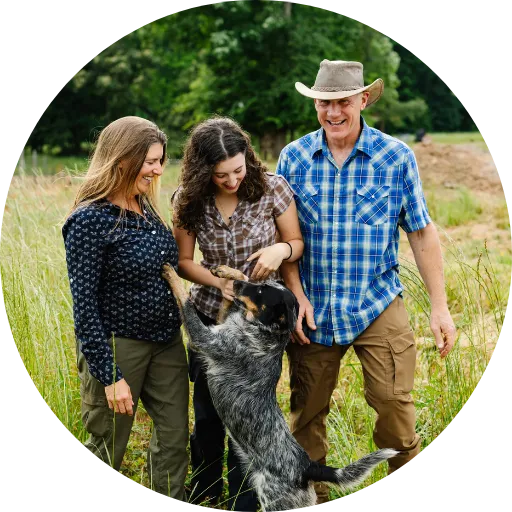
Hubert Karreman
Salon F-H
Building Pasture from the Ground Up - With Suzanne and Dr. Hubert Karreman: practical steps to build productive pasture-based livestock systems, including how they boosted soil organic matter from 0.5% to 5% on 200 acres and converted forestland/hayland into productive pasture/silvopasture.
Panel Discussion - Superior
4:15 pm - 5:00 pm
Rick Clark, John Kempf and Gabe Brown

Colsing Keynote - Gabe Brown - Superior
5 pm - 6 pm
Closing General Session - The Future Is Regenerative: Thriving in an Uncertain Economy (Keynote): As global markets shift and conventional systems strain under economic and environmental pressure, Gabe Brown offers a hopeful path forward. Drawing on four decades of experience transforming his North Dakota ranch through regenerative practices, Gabe reveals how soil health principles create not just ecological resilience—but economic stability and opportunity. This keynote explores how regenerative agriculture can reduce risk, cut costs, and build lasting profitability, even in the face of market volatility. The future belongs to those who work with nature, not against it—and Gabe shows how that future is already growing from the ground up.
You Need To JOIN US
Sponsors
Presenting Sponsor
Green Lightning
Booth in Bookstore

Presenting Sponsor
Noble Research Institute
Booth 47 & 48

Platinum Sponsor
Tend
Booth 50-51

Gold Sponsor






Wifi Sponsor

Reception Sponsor

Keynote Sponsor

Charging Station Sponsor

Reception Sponsor

Tradeshow Exhibitors
Farm And Ranch Freedom Alliance, Council For Healthy Food Systems
[email protected]
(214) 493-9314
Booth: 61
What Sets Us Apart
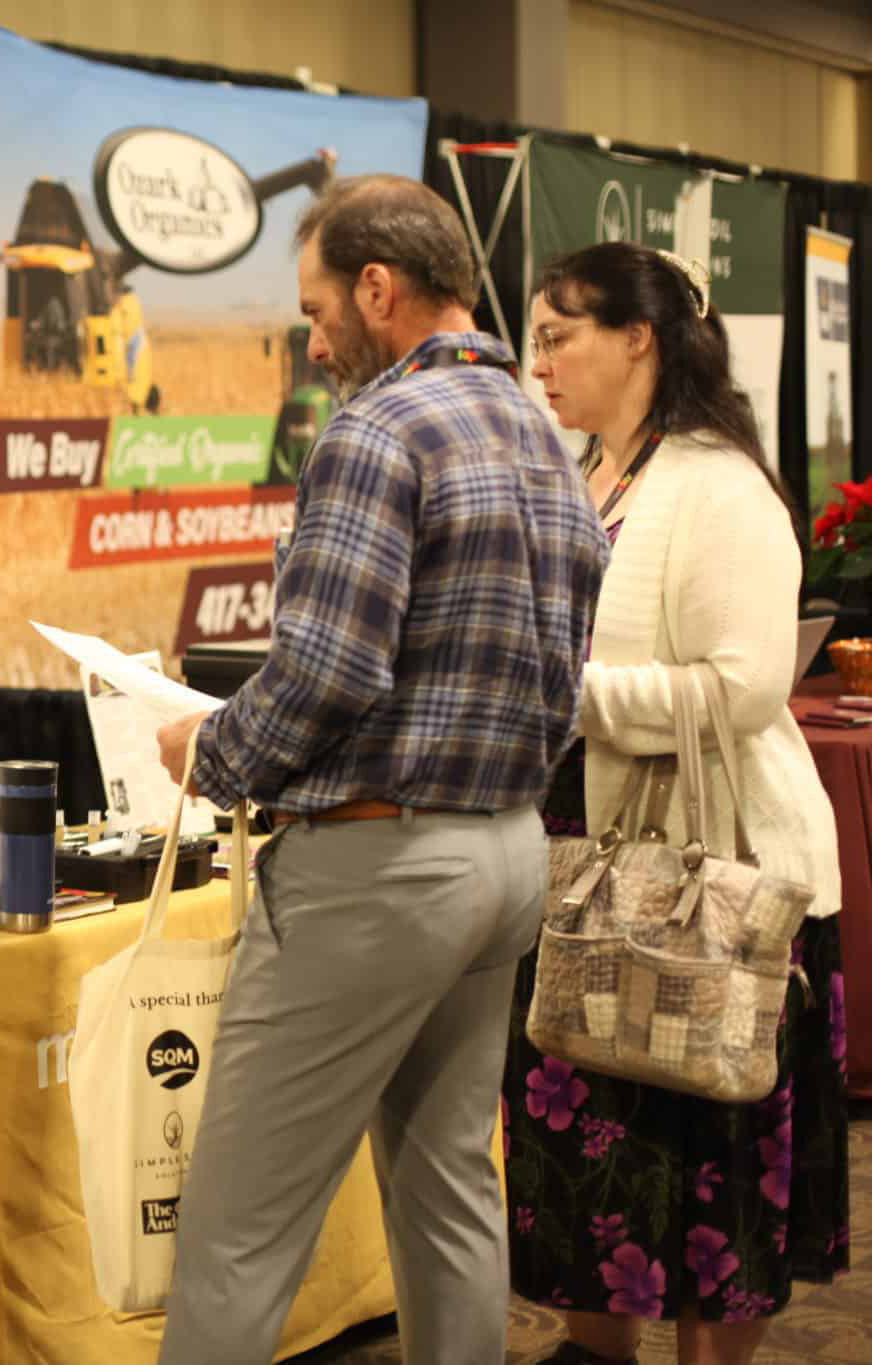
Every year, the Eco-Ag Conference & Trade Show sets a new standard for innovative and practical learning in modern agriculture. This is not your average regenerative farming conference. Eco-Ag is the premier conference for science-based sessions on regenerative agriculture. You will learn techniques and tactics you can immediately take home to the farm and put into practice. Each moment of programming is thoughtfully curated to provide useful, practical and measurable information and connections that you can apply to your operation.
Join us for the main conference and trade show on Dec. 4-5 or decide to come early for one of our incredible full-day Eco-Ag U intensive workshops Dec. 2-3… either way you can expect a fulfilling experience that will include:
Exceptional learning from leading farmers, agronomists, and others who are pioneering a new way to farm ecologically and economically.
Engagement with innovative companies building tools and services to help you surpass your regenerative farming goals.
Connecting with your peers who are also seeking to chart a new path forward for their regenerative operations and with experienced growers and agronomists who have valuable lessons learned and are ready to share.
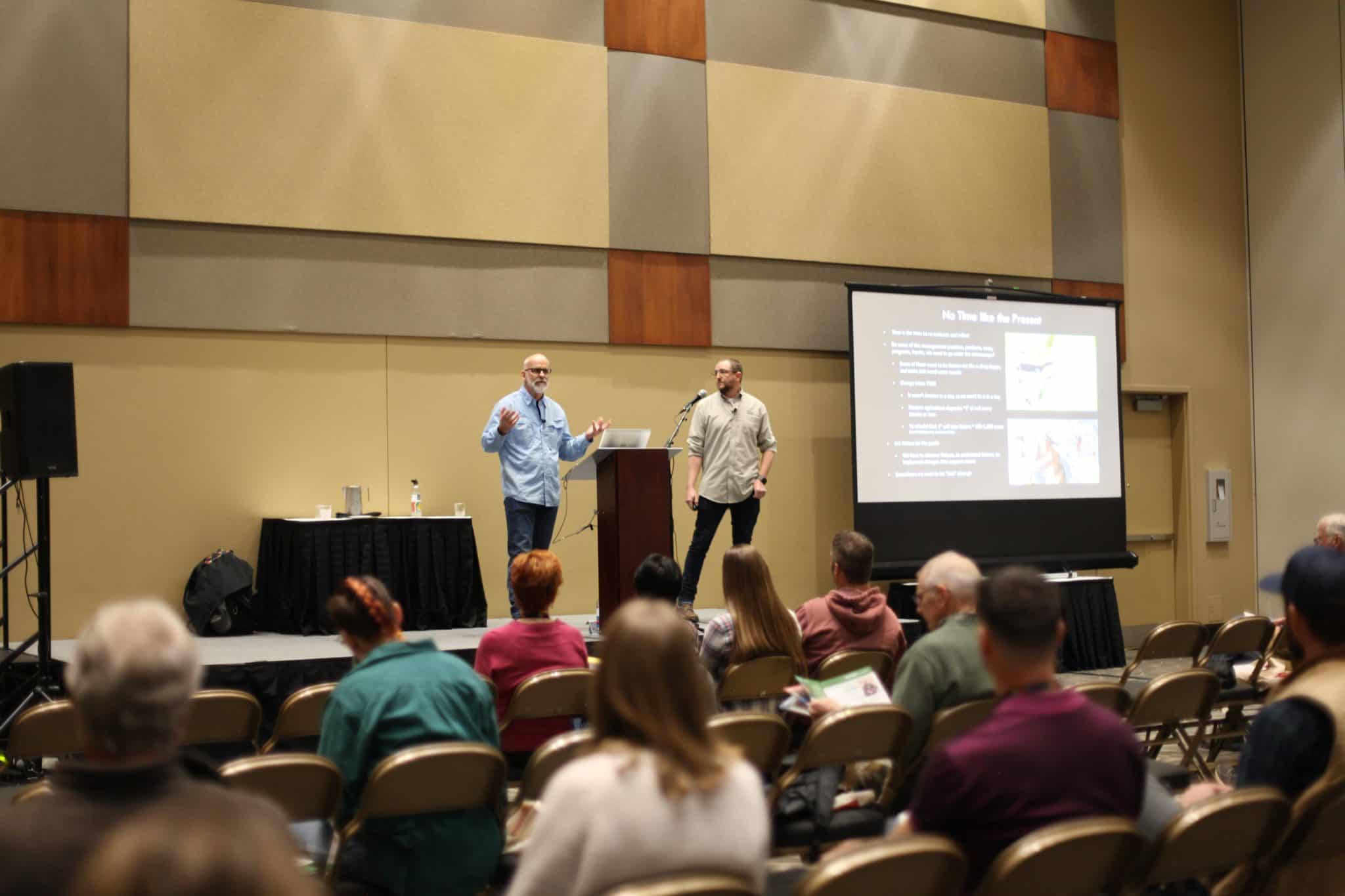
Program
The Eco-Ag Conference & Trade Show is filled with engaging keynote speakers, 1- to 2-hour breakout sessions in regenerative agriculture topics ranging from soil health – including making the most of the microbiome, composting, cover cropping and more, to farm management to livestock and beyond.
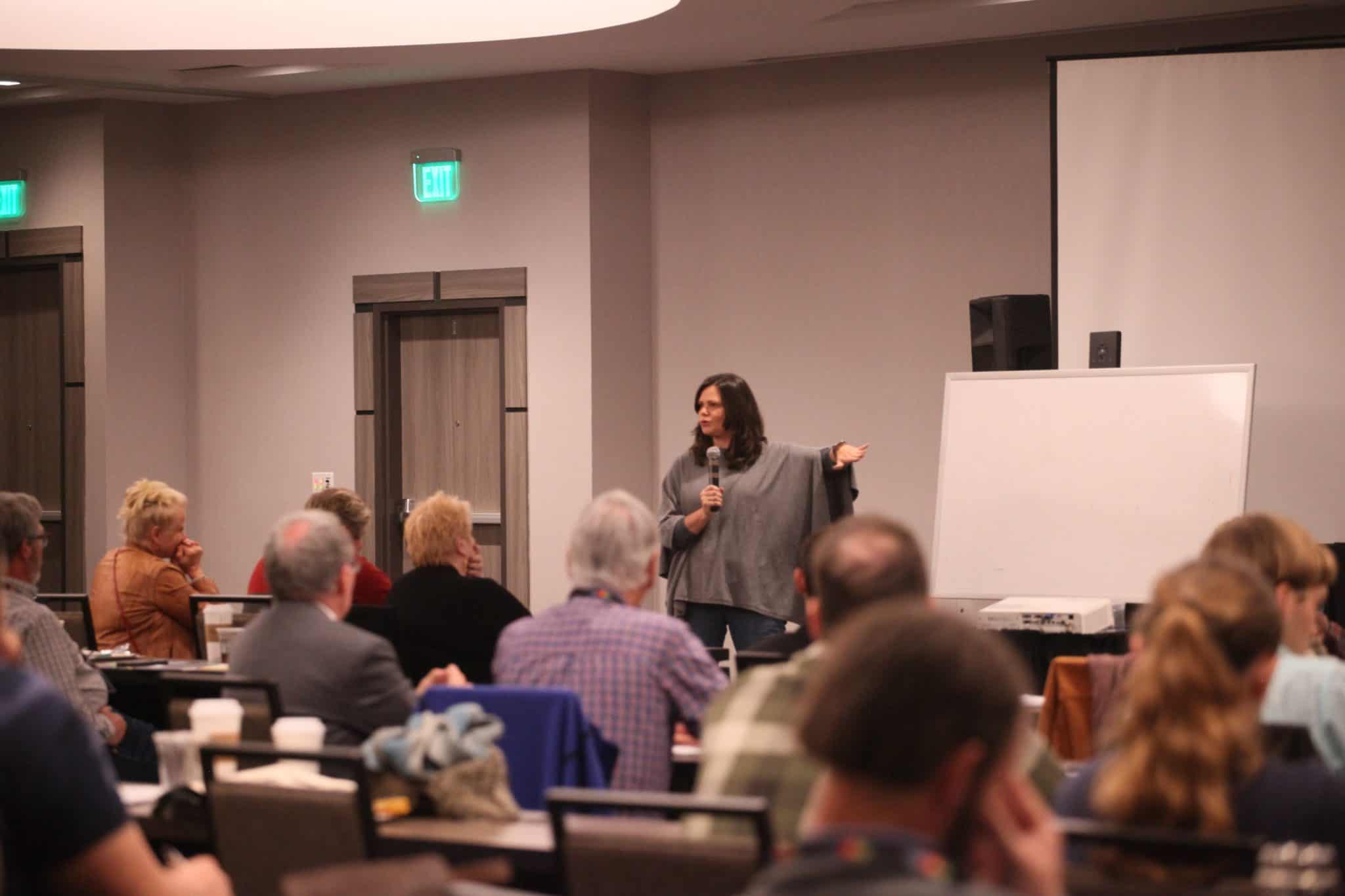
Eco-Ag U
Get the most out of your experience by signing up for an Eco-Ag U workshop (or two!) – the registration fee includes your choice of pre-conference workshops plus the entire conference and trade show. Spend a full day with an instructor diving deep into a topic that’s important to you.
You will have direct, small-classroom access to the top minds in eco-agriculture, where you can learn the real details behind their success, and ask questions specific to your farm or operation.

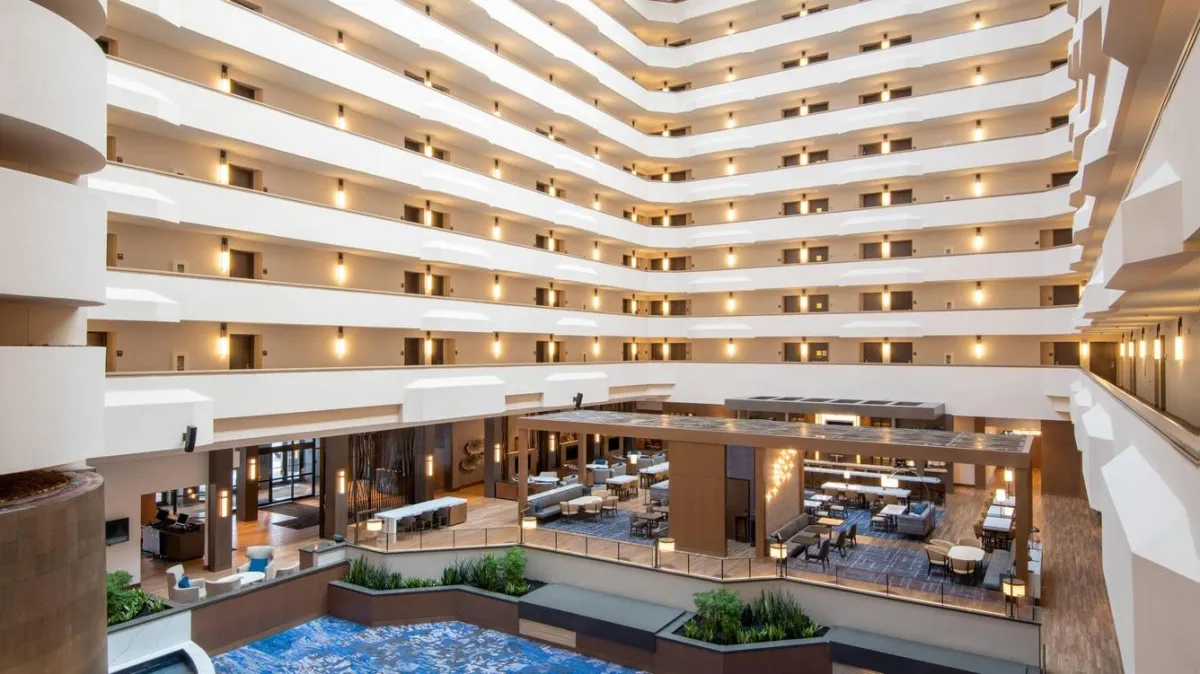
Marriott Madison West
1312 John Q Hammons Dr, Middleton, WI 53562
1 608-831-2000
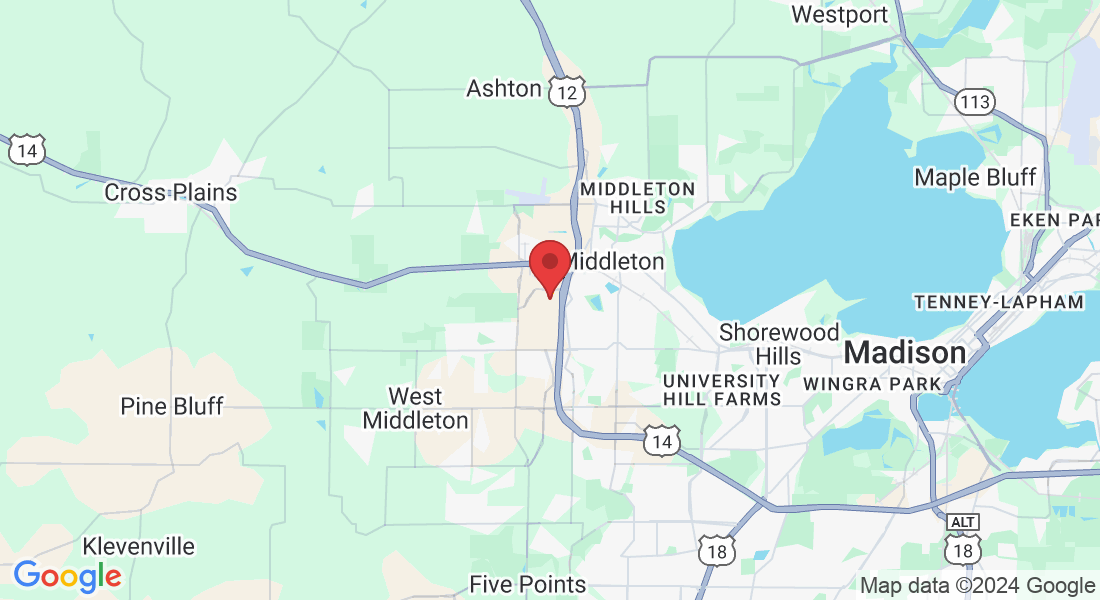
1313 John Q Hammons Drive Middleton, Wisconsin 53562

Downtown Madison, Wisconsin

© 2025 All rights reserved